SC shooter ignored history

By now, I’m sure you’ve heard about the murders of the pastor and eight parishioners at historic Emanuel African Methodist Episcopal Church in Charleston. The assailant – who’s still on the loose as of this writing – appears to be a young white man. But while this tragedy is senseless, history tells us that survivors and even those beyond Charleston will use this to begin or continue to propel meaningful dialogue and action.

Any student of history should not be surprised that this young man targeted a black church in his attempt to demobilize its people. Attacks against the black church have long been a strategy by terrorists. During slavery, the black church caused ire among slaveholders who were afraid that collective black thought would lead to insurrection. This fear led to limitations of the religious freedom of blacks, slave and free, in the South. In fact, Emanuel was destroyed by fire a few years after its founding in 1816. This event did not destroy the congregants who eventually rebuilt. The church became a stalwart symbol of Charleston’s civil rights struggle of the 20th century.

During Birmingham’s civil rights movement, terrorists here also attacked the black church. On Christmas night in 1956, civil rights leader Fred Shuttlesworth emerged from a parsonage left hobbled by six sticks of dynamite. Shuttlesworth was the pastor of the Bethel Baptist Church in the black working-class neighborhood of Collegeville in Birmingham. In later years, Shuttlesworth pointed to that event as validation that God would protect him as he led Birmingham’s civil rights movement. “…God took fear from me. He prepares you, I guess for what you have to do for Him,” Shuttlesworth said in later years.  Shuttlesworth was not the only one galvanized that night. Those who gathered that night were revitalized as well as black people throughout the city.

Bethel Baptist Church and parsonage following the '56 Christmas bombing.

Bethel Baptist Church and parsonage following the ’56 Christmas bombing.

The day after the bombing, 250 black residents rode local buses to test the new federal decree that outlawed segregated public transportation (but local laws still upheld segregation). Throughout the ’50s and early ’60s, Shuttlesworth was instrumental in calling attention to the plight of folks living under the weight of Jim Crow. The church would be bombed twice more – once in 1958 and again in 1962. Neither of those occurrences resulted in casualties, either.
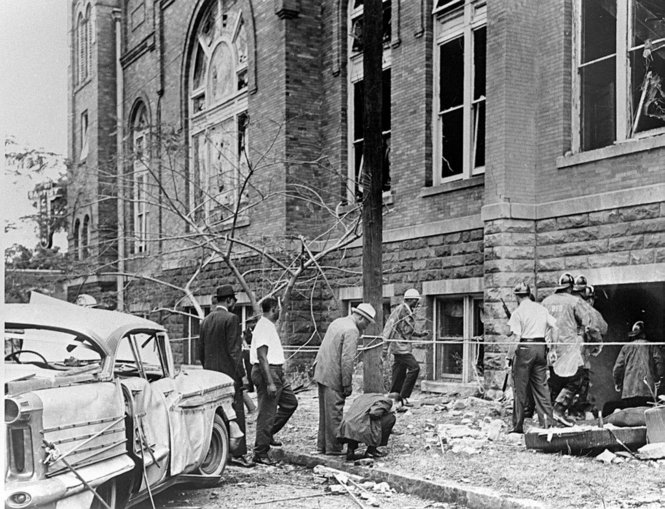
Fire personnel and onlookers view the damage at 16th Street Baptist Church.

Fire personnel and onlookers view the damage at 16th Street Baptist Church.

Unfortunately, the same thing can not be said of the bombing of Birmingham’s 16th Street Baptist Church in 1963 where four young black girls were murdered. That horrific event helped to wake up ambivalent white Americans to the plight of Southern blacks. And black people in Birmingham and beyond were more determined than ever to fight. If history has any say, years later we will view this tragedy as a turning point, too.
What will you do for #MuseumWeek 2015 ?

The powers-that-be have declared this week as #MuseumWeek on twitter, and that’s great for us in Birmingham. Why? Because there’s no shortage of extraordinary museums in our fair city. When was the last time you’ve visited one of the area’s museums? If it’s been awhile, make plans to go this week. Use the list below to help narrow your choices (or just visit them all).

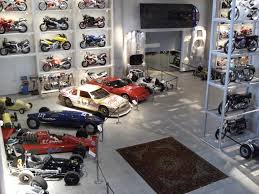
Barber Vintage Motorsports Museum
6030 Barber Motorsports Pkwy. 

Barber

Stop by Barber Vintage Motorsports Museum to check out their massive collections of motorcycles, racecars and Lotus cars. For $15 above the price of admission, you can sign up for the premium, docent-led tour. Tours are given Friday and Saturday at 11 a.m. and 2 p.m. and on Sunday at 1 p.m.

Birmingham Civil Rights Institute
520 Sixteenth Street North

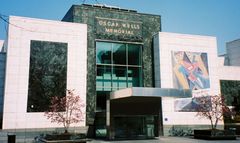
Across the street from the Sixteenth Street Baptist Church sits the Birmingham Civil Rights Institute.  According to its website, BCRI’s mission is “to enlighten each generation about civil and human rights by exploring our common past and working together in the present to build a better future.” You can take a self-directed tour that educates you on the civil rights movement of the 1950s and ’60s as well as today’s fight for human rights. View photojournalist Spider Martin’s photos that chronicles 1965’s Selma to Montgomery march.

Photo credit: Spider Martin

Photo credit: Spider Martin

You can also catch “American Boricua: Puerto Rican Life in the United States,” a documentary project that takes a look at Puerto Rican life throughout all 50 states of the U.S. Click here for the museum’s daily admission rates.

Birmingham Museum of Art
2000 Rev. Abraham Woods Jr. Blvd. 

Birmingham Museum of Art

Birmingham Museum of Art

The Birmingham Museum of Art has been in existence for almost 65 years. It’s a great place to view the galleries alone or bring the kids along to participate in the museum’s fun drop-in art programs and tours. On this Saturday (March 28) from 11 a.m. to 1 p.m., families can drop by to make an African necklace or bracelet with the museum’s mascot, Bart. Later that day (from 2 p.m. to 3 p.m.), adults and teens can enjoy a public tour of BMA’s new exhibition “Small Treasures: Rembrandt, Vermeer, Hals, and Their Contemporaries.” Tickets are free to BMA members and $12 for non-members.

McWane Science Center
200 29th Street North

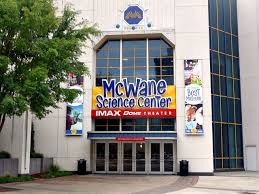
If you have children, then chances are you’ve been to the McWane Science Center. But it may be time to visit again this week, on your own or with the kiddies in tow. The center was designed to foster a life-long love of learning for folks of all ages. In addition to the permanent exhibits, there’s the temporary exhibit “Mindbender Mansion,” where visitors can try to master brain teasers and more.

McWane

The center is also home to the city’s only IMAX cinema. Click here for general admission prices. 

Southern Museum of Flight
4343 73rd Street North

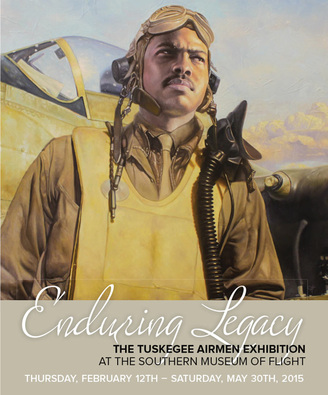
If you’ve never been to the Southern Museum of Flight, this is the week to find out what you’ve been missing. Located a stone’s throw away from Birmingham’s airport, the museum will open your eyes to the region’s rich aviation history. Right now the museum is featuring an exhibit on the Tuskegee Airmen called “Enduring Legacy.”

Tuskegee Airmen

Some of the other exhibits include “Korean War Jets,” Vietnam War Helicopters,” and the “Lake Murray B-25,” which features the aircraft that was recovered from the South Carolina lake in 2005. During WWII, the U.S. Army Air Forces (USAAF) conducted exercises there. Contact the museum at 205-833-8226 for admission costs.

Vulcan Park and Museum
1701 Valley View Drive

Vulcan

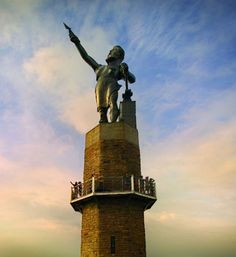
Designed by Italian sculptor Giuseppe Moretti and cast from local iron in 1904, Vulcan, the world’s largest cast iron statue, is definitely the museum’s star. But a trip there should consist of more than just a visit to the observation deck. The museum offers a riveting look at events that helped shape Birmingham. Did you know that Ensley was once home to Little Italy? If you haven’t checked out “La Storia: Birmingham’s Italian Community,” visit the museum this week to learn more about early Italian residents. Click here for admission costs. 

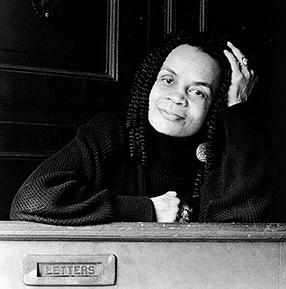
Sonia Sanchez

30 Things I Didn’t Know about Birmingham

I’m sharing interesting tidbits I’ve recently learned about Birmingham and some of her people. These items may be new to you as well or just a reminder. 

Number TWELVE

Did you know that Sonia Sanchez, the famed poet, playwright, essayist, etc., was born in Birmingham? Born Wilsonia Benita Driver on September 9, 1934, Sanchez was named for her father, jazz musician and teacher Wilson Driver (who studied under John “Fess” Whatley).  Some of her collections include “Homecoming” (1969), “I’ve Been a Woman: New and Selected Poems” (1985), and “Morning Haiku” (2010).

Sonia Sanchez Photo credit: Marion Ettlinger

Sonia Sanchez
Photo credit: Marion Ettlinger

From “Morning Haiku”

Let me wear the day
Well so when it reaches you
You will enjoy it

Read more about Sanchez here.

Birmingham native explores history of neglected landmark

30 Things I Didn’t Know about Birmingham

I am sharing interesting tidbits I’ve recently learned about Birmingham and some of her people. These items may be new to you as well or just a reminder. 

Number ELEVEN

On Mother’s Day in 1963, around midnight, the A.G. Gaston Motel was bombed. The motel’s guests were understandably shaken. And word soon reached the hotel that the house of A.D. King, Martin Luther King’s brother, was also bombed that night.

Destruction at the hotel following the May 11, 1963 bombing

Destruction at the hotel following the May 11, 1963 bombing

I knew about the bombs, but I’ve just learned that despite the movement’s commitment to nonviolence, many people who were gathered at the hotel began to throw bricks at the police, and some even knifed the tires of police cars, among other things.  “Blacks were tired and mad…the police and National Guard had to rope off blocks surrounding the motel. Folks were not let in or out. According to a New York Times article, the thunk of Billy clubs hitting skulls inside the motel could be heard from across the street,” says Marie Sutton, a local journalist, via email.

Sutton is also the author of “A.G. Gaston Motel in Birmingham: A Civil Rights Landmark,” a new book that explores the history and cultural significance of the motel.

The motel was named for Arthur George Gaston, whose rags-to-riches story has inspired many people in and outside of Birmingham.  Read on for more of my conversation with Sutton.

Why did you decide to write about the Gaston Motel? Although I grew up in Birmingham, I had never, ever heard of the motel. In 2004, I started working at the Birmingham Civil Rights Institute and learned about the Gaston, its revolving doors of celebrities and its history of having been the headquarters of the movement. The storyteller inside of me said, “That’s a book!”

What’s the most surprising thing you found during your research? Since I didn’t know about the motel, it was surprising that it existed and was part of our community for so long; for more than 30 years. And, even more surprising than that is that the city has allowed it to sit and collect dust when it meant so much to the community and was the site for many important meetings and strategies.

Marie Sutton

Marie Sutton

It’s no secret that Gaston was pretty conservative in his thoughts on how blacks should address Jim Crow in Birmingham; although he would rather the community take a slower approach, he still provided support for the movement. Did your research unearth any insight into this dichotomy? Truthfully, it was not his intent to make the motel the headquarters for the movement. Gaston was certainly against segregation but felt there was a more diplomatic way to do so rather than the seemingly radical approaches of King and his group. Keep in mind, he was much older than the young King and his group. [Gaston] also had established relationships with business owners.

What do you want the reader to take away after they’ve read the last sentence? I want them to take away that this motel has significance and should not be allowed to waste away. It served as the backdrop for the memories of many blacks in Birmingham and should be cherished like your grandmother’s antique strand of pearls.

Marie Sutton will be signing “A.G. Gaston Motel in Birmingham: A Civil Rights Landmark” at Brookwood Village’s Books-a-Million this Saturday, November 15, at 2 p.m.

Ethel Armes: Pioneer Journalist

30 Things I Didn’t Know about Birmingham

I’m sharing interesting tidbits I’ve recently learned about Birmingham and some of her people. These items may be new to you as well or just a reminder. 

Number TEN

In the early 1900s when Ethel Armes arrived in Birmingham, it was not common to meet a woman who made her living as a journalist. But the Washington D.C. native was an accomplished one, having worked at The Washington Post as a reporter and features writer as well as once working for The Chicago Chronicle. She became a member of The Birmingham Age-Herald’s staff upon her arrival.

In 1907, the Birmingham Chamber of Commerce hired Armes to write a history on the state’s coal and iron industries, according to the book “True Tales of Birmingham.”  Armes’ research reached beyond reviewing various books; she got in the trenches herself. “A diligent and meticulous researcher, she put on a miner’s cap and inspected coal and iron sites and communities across the northern Alabama mineral region,” stated “True Tales of Birmingham.”  Armes’ book, “The Story of Coal and Iron in Alabama,” was published in 1910.

You can download a free e-copy of Armes’ book here.

The Birmingham Age-Herald building where Ethel Armes briefly worked

The Birmingham Age-Herald building where Ethel Armes briefly worked

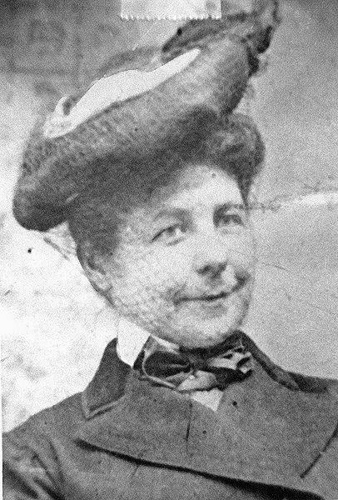
Mary Anderson invented the windshield wiper

30 Things I Didn’t Know about Birmingham

I am sharing interesting tidbits I’ve recently learned about Birmingham and some of her people. These items may be new to you as well or just a reminder. Please join me each day for a new fact.

Number Nine

I just learned that a Birmingham resident invented the windshield wiper. Mary Anderson was born in Greene County in 1866 but moved to Birmingham with her widowed mother and sisters in 1889.

It was during a visit to New York in 1903 that Anderson noticed “that the motorman drove with the front window open because of difficulty keeping the windshield clear of falling sleet. When she returned to Alabama she hired a designer for a hand-operated device to keep a windshield clear and had a local company produce a working model. She applied for, and in 1903 was granted, a 17-year patent for a windshield wiper.Her device consisted of a lever inside the vehicle that controlled a rubber blade on the outside of the windshield. The lever could be operated to cause the spring-loaded arm to move back and forth across the windshield. A counterweight was used to ensure contact between the wiper and the window.Similar devices had been made earlier, but Anderson’s was the first to be effective,” according to Wikipedia.

Click the following link for more information: http://en.wikipedia.org/wiki/Mary_Anderson_(inventor).

Mary Anderson (1866-1953)

Mary Anderson (1866-1953)

Birmingham’s lady commissioner

30 Things I Didn’t Know about Birmingham

I am sharing interesting tidbits I’ve recently learned about Birmingham and some of her people. These items may be new to you as well or just a reminder. 

Number SEVEN

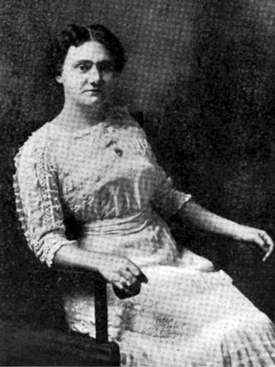
I just learned that Mary Echols was elected as Birmingham’s first – and only – female commissioner on this day in 1921, just a year after Congress ratified the 19th amendment which gave women the right to vote.

From 1911 to 1963 Birmingham was governed by commissioners. (Most of that time, there were three commissioners, but from 1915 to 1923, the commissioners grew to five.) Echols served as commissioner of health and education.

Her job ranged from listening plumbers complain about the dangers of Birmingham’s defective plumbing (Echols stated there was no definitive plan to correct the problem, but the issue would probably be brought before the entire commission) to weighing in on the possible vulgarity of photos of a “fight film.” Echols thought the film was fine and provided an endorsement. “The picture is as clean as can be,” she said. “I know as I have seen it. If I thought there was anything objectionable in it or anything that would in any way hurt the morals of our young men and women I would go hungry before I would vote for it.

Echols did not serve her full six-year term because the commission eliminated two positions. Tragically, she died in 1929 when her clothes caught on fire after she brushed against a space heater at her home.

Mary Echols

Mary Echols

Charity begins at home

30 Things I Didn’t Know about Birmingham

I am sharing interesting tidbits I’ve recently learned about Birmingham and some of her people. These items may be new to you as well or just a reminder. 

Number SIX

If you’ve been in Birmingham for some time, the Bruno name is quite familiar.  From their once-bustling eponymous grocery stores to their numerous charitable contributions, the family’s last name was as visible to residents as Vulcan’s bottom.

But I just recently learned about Vincent and Theresa Bruno’s, the family’s patriarch and matriarch, hardscrabble start.  The Brunos were a young couple when they made their way to Birmingham from Sicily in 1908. Vincent began working at one of the local furnaces while Theresa took care of the home.  Despite the family’s struggle to make ends meet during that time, Theresa still provided help to those in need.  There’s one story from “True Tales of Birmingham” that exemplifies this: “The Bruno kitchen was always open to homeless men who arrived daily on freight trains, begging a meal. Theresa fed them at her table, usually a zesty vegetable stew and fresh Italian bread. If one of her children asked who the stranger was, she would reply: ‘Chi sa. Non fa niente. Aveva appetito.’ (Who knows. It doesn’t matter. He was hungry.”)

Photo credit: Life Magazine Walking the rails during the Great Depression.  Date and location unknown.

Photo credit: Life Magazine
Walking the rails during the Great Depression. Date and location unknown.

The Long Hill of the Dyed Rock

30 Things I Didn’t Know about Birmingham

I am sharing interesting tidbits I’ve recently learned about Birmingham and some of her people. These items may be new to you as well or just a reminder. 

Number FIVE

Long before Birmingham was established in 1871, Native Americans around these parts referred to Red Mountain by the aptly descriptive name of “The Long Hill of the Dyed Rock.”  They and white settlers used the reddish rocks (iron ore) to dye fabrics. According to “True Tales of Birmingham,” in the 1800s, “a few bars of iron were priceless and several area blacksmiths tried, without success, to forge iron from the mountain’s rich supply of reddish ore.”

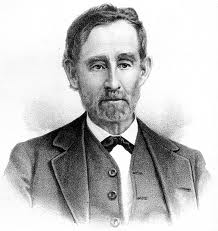
Baylis Earle Grace (1808-1893)

Baylis Earle Grace (1808-1893)

Enter Baylis Earle Grace, who, as a 12 year-old, came to Jefferson County in 1820 with his parents. As a grown man, he purchased a farm in the Oxmoor Valley. In the 1850s, Grace gathered a wagon load of iron ore from his land and drove it to a puddling furnace in Bibb County where the ore was turned into iron bars. Legend has it that Grace always kept one of the bars on his desk as a reminder of his feat.