From Slave to Inventor

30 Things I Didn’t Know about Birmingham

I am sharing interesting tidbits I’ve recently learned about Birmingham and some of her people. These items may be new to you as well or just a reminder. Please join me each day for a new fact.

Number FOUR

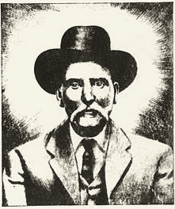
Recently I’ve learned about a former slave who was perhaps this area’s first black millionaire. Andrew Jackson Beard, born in 1849, grew up a slave in Jefferson County. After gaining emancipation at 15, he became a farmer. However, farming did not appeal to Beard. After a while, he began working for the Alabama and Chattanooga railroad. Several reports state he lost a leg and a couple fingers due to the dangerous work of coupling cars (where a worker would stand between the cars and guide the link into a coupler pocket as the cars came together).  Whether these reports are true or not, it’s no secret that this work was risky. According to the African-American Registry, a website that promotes black history education, “Few railroad men kept all their fingers, many lost arms and hands. And, many were caught between cars and crushed to death during the hazardous split-second operation.”

Beard invented what would become known as the “Jenny” coupler. His invention took away the need for a man to stand between the uncoupled cars. A patent was issued for the device on November 23, 1897.  Beard is also credited with inventing a rotary engine and a plow. He also dabbled in real estate. The book “True Tales of Birmingham” states his inventions made him a rich man, and he is thought to be Jefferson County’s first black millionaire.

Unfortunately, Beard became penniless after suffering several losses. He died in 1921 and is buried in Woodlawn Cemetery in an unmarked grave. 

Andrew Jackson Beard

Andrew Jackson Beard

Lost Beauty

30 Things I Didn’t Know about Birmingham

 I am sharing interesting tidbits about Birmingham and some of her people that I’ve recently learned. These items may be new to you as well or just a reminder. 

Number THREE

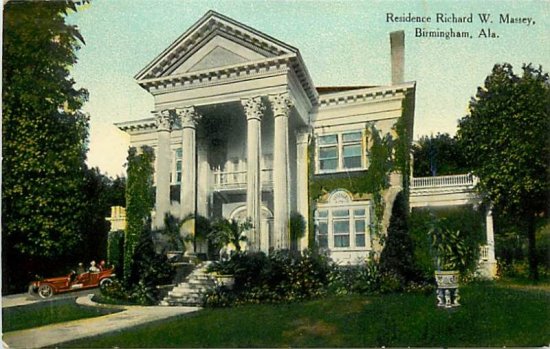
Birmingham is filled with older, stately homes that seemed to have gotten finer with time. And many neighborhoods, from Avondale to Norwood, are experiencing a renaissance of sorts, where long-neglected structures with good bones are being handsomely restored. But only recently have I learned of a masterpiece of a house, a real beauty, that was eventually demolished to make way for the Elton B. Stephens Expressway in the early 1960s. 

Located at 1401 Beech Street (now 21st Way South),  architect Joseph C.Turner designed and built the house to serve as a showpiece, as a testament to his skills. It has been described as beaux-arts style and Greek revival; perhaps, Turner designed the house to be a bit of both. According to bhamwiki.com, the 20-room mansion featured “a circular entrance hall with a marble fountain at the center. A circular stair gave access to the second-floor bedrooms while the top of the rotunda had a stained-glass dome which was illuminated at night. Each room, including the bedrooms, had a fireplace with a unique, hand-carved mantelpiece and a crystal chandelier.”

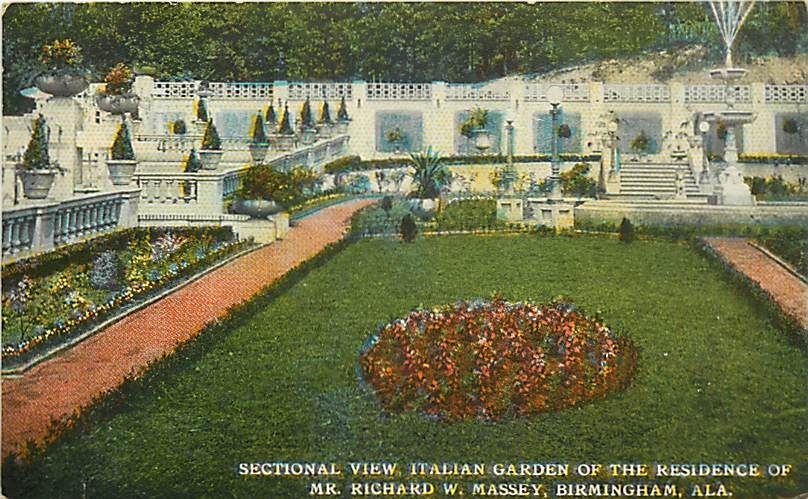
Unfortunately, Turner and his family never got the chance to move in as his wife died from pneumonia after refusing treatment because of her faith in Christian Science. The architect sold the house to a prominent businessman in town, Richard Massey, founder and owner of Massey Business College.  Massey and his wife called the house Turner and hired an Italian gardener to create the city’s first Italian garden. The place was reknown throughout the city and the South.  The Masseys even hosted President Taft during his visit to the city 105 years ago today.

Click here for more information. 

The Massey Residence

The Massey Residence

The Massey Residence's Italian Garden

The Massey Residence’s Italian Garden

Margaret Walker – Native Daughter?

30 Things I Didn’t Know about Birmingham

Number TWO

 I am sharing interesting tidbits about Birmingham and some of her people that I’ve recently learned. These items may be new to you as well or just a reminder. 

You have probably read “Jubilee,” the beautifully written historical novel by Margaret Walker, but did you know that Walker was born in Birmingham in 1915? In her book, “Conversations with Margaret Walker,” she wrote that her father pastored a church in Enon Ridge (near Fairfield) and all four children were born here. Her family remained in Birmingham until they moved to New Orleans in 1925.

When she talked about what it took to write “Jubilee,” which is set during the Civil War, Walker recalled soaking up her grandmother’s stories about her mother’s time spent in slavery. It was in Birmingham where Walker first heard her grandmother’s stories that fueled her imagination and helped her create an American classic.

Click the following for more information on Margaret Walker: http://www.encyclopediaofalabama.org/face/Article.jsp?id=h-2430.

Vulcan and the Teacher

30 Things I Didn’t Know about Birmingham

I am sharing interesting tidbits about Birmingham and some of her people that I’ve recently learned. These items may be new to you as well or just a reminder. 

Number ONE

Vulcan and the Teacher

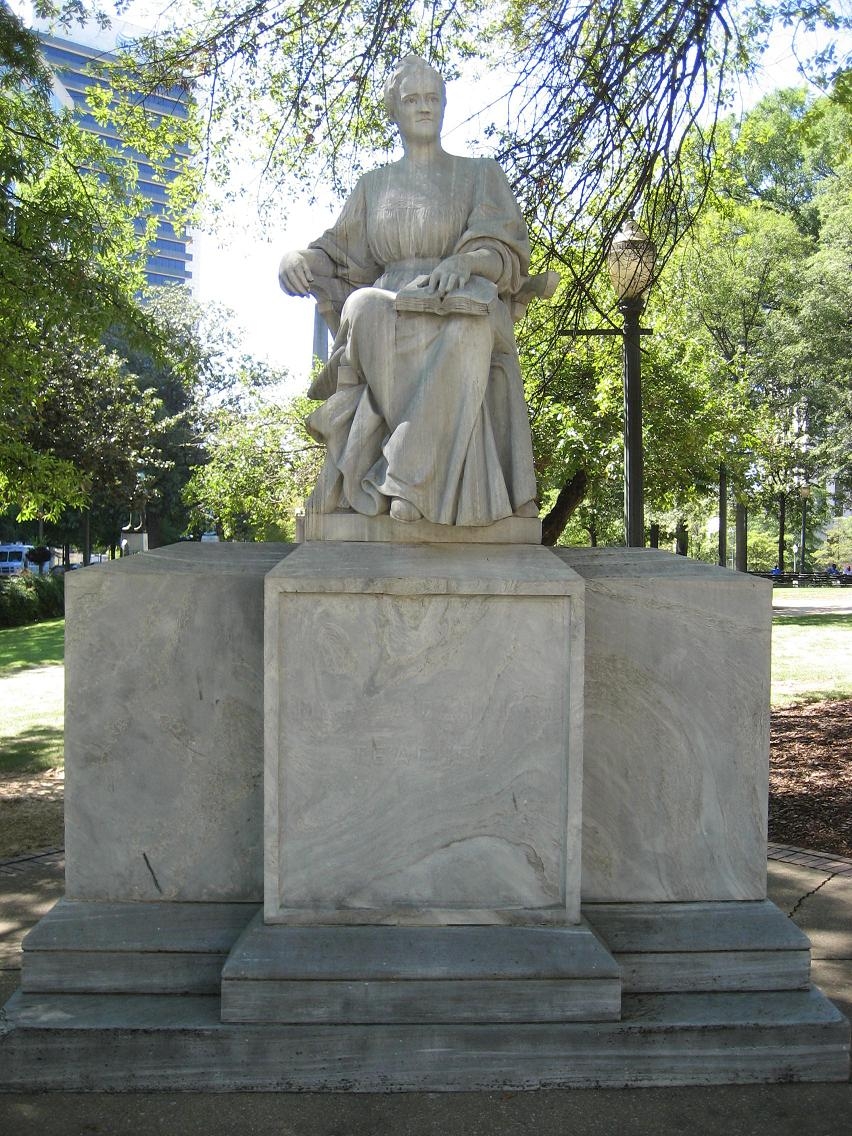
Walk through Linn Park headed toward Birmingham’s world-class Linn-Henley Research Library and you’ll pass a statue of a handsome, studious woman. The statue depicts Mary A. Cahalan resting a heavy book on her lap; it’s a pose worthy of her position as teacher and then later principal of Powell School. The statue was dedicated on May 1, 1908, two years after Cahalan’s death, and restored in 2006.

Did you know that Giuseppe Moretti sculpted the piece? His name should sound familiar as Moretti (1857 – 1935) also designed Vulcan, the city’s much-loved iron man.

Statue of Mary A. Cahalan

Statue of Mary A. Cahalan

Giuseppe Moretti

Giuseppe Moretti

Keeping Traditions Alive: Saint Elias celebrates diversity through annual festival

When Theresa Garnem arrived in Birmingham from Lebanon in 1972, she was excited, yet a little anxious to navigate a new world.

“I was 11 years old, and came over with my grandmother.  I wasn’t sure what to expect,” said Garnem.

Garnem began attending Saint Elias Maronite Catholic Church almost immediately. She said she was happy to find a place that embraced the customs of Lebanon.

“Saint Elias reminded me of church back home, so much tradition. The food, the dance, the hymns, they remind me of home.”

The food, dance and other aspects of the Lebanese culture will be on display this Friday, May 25, and Saturday, May 26, at the Lebanese Food and Cultural Festival on the Southside campus of Saint Elias, the only Maronite church in Alabama.

This is the 16th year of the festival, which was started by Paul Bolus.

Bolus started the festival because “we wanted our culture, heritage, and religion to be known in the Birmingham community,” he said.

Bolus said he and others would go to various ethnic festivals to see what it took to take on such an endeavor.  “The people who put on the Greek festival really helped us that first year,” said Bolus.

He feels it’s not only important for the church to educate the public on their ways and customs, but to also make sure those customs are passed down to future generations.

Garnem agrees. She works with both girls and boys in teaching the traditional dance Dabke.  The dance imitates the movements of those who pick grapes and stomp them to make wine.

Gerry Kimes joined Saint Elias when he married his wife Beverly in 1970. Kimes said Saint Elias’s services “spoke to me,” and his fellow congregants welcomed him from the start.

Beverly Kimes said the church is a family-oriented one. When I asked how many people attended Saint Elias, she didn’t answer in terms of individuals. “There are about 300 families,” said Beverly.

On the day I visited the church, Beverly was busy preparing zalaybah, a type of Lebanese donut.  Gerry Kimes offered me one, which I accepted. Its taste reminded me of a beignet without all that powdered sugar. He also offered a cup of strong Lebanese coffee. “It’ll wake you up,” he said.  Since I’m not a coffee drinker, I passed.

Kimes likes the idea of welcoming the community with food. “The best way to get people’s attention is to feed them,” said Kimes.

The congregants begin planning for the next festival almost immediately after the current one wraps up.  They begin preparing food in February.  Bolus expects almost 9,000 people to attend this year’s festival.  And before the weekend is over, they’ll serve:

2100 chicken halves
2000 pounds of kibbe
6800 spinach pies
2000 meat pies
12,000 grape leaves

There will also be several specialty dishes that are made in smaller batches.

To make sure the traditional recipes are not forgotten, the church created a cookbook in 2008. There are several dishes that have more than one recipe, as if no one could make a decision as to whose recipe would be admitted because each was just as worthy.

The festival goes from 10 a.m. to 9 p.m. Friday and Saturday. Admission is free, and credit cards are accepted.

Guided tours start each hour beginning at 11 a.m. from the front steps of the church.   Guided tours will end at 7 p.m.  Guests can also take self-guided tours on both days from 11 a.m. to 8 p.m. Note that no tours are available at 5 p.m. on Saturday during a liturgy service. The parish started in 1910 in a different location.  The congregants have worshipped in their current location since 1950.

Theresa Garnem

Theresa Garnem

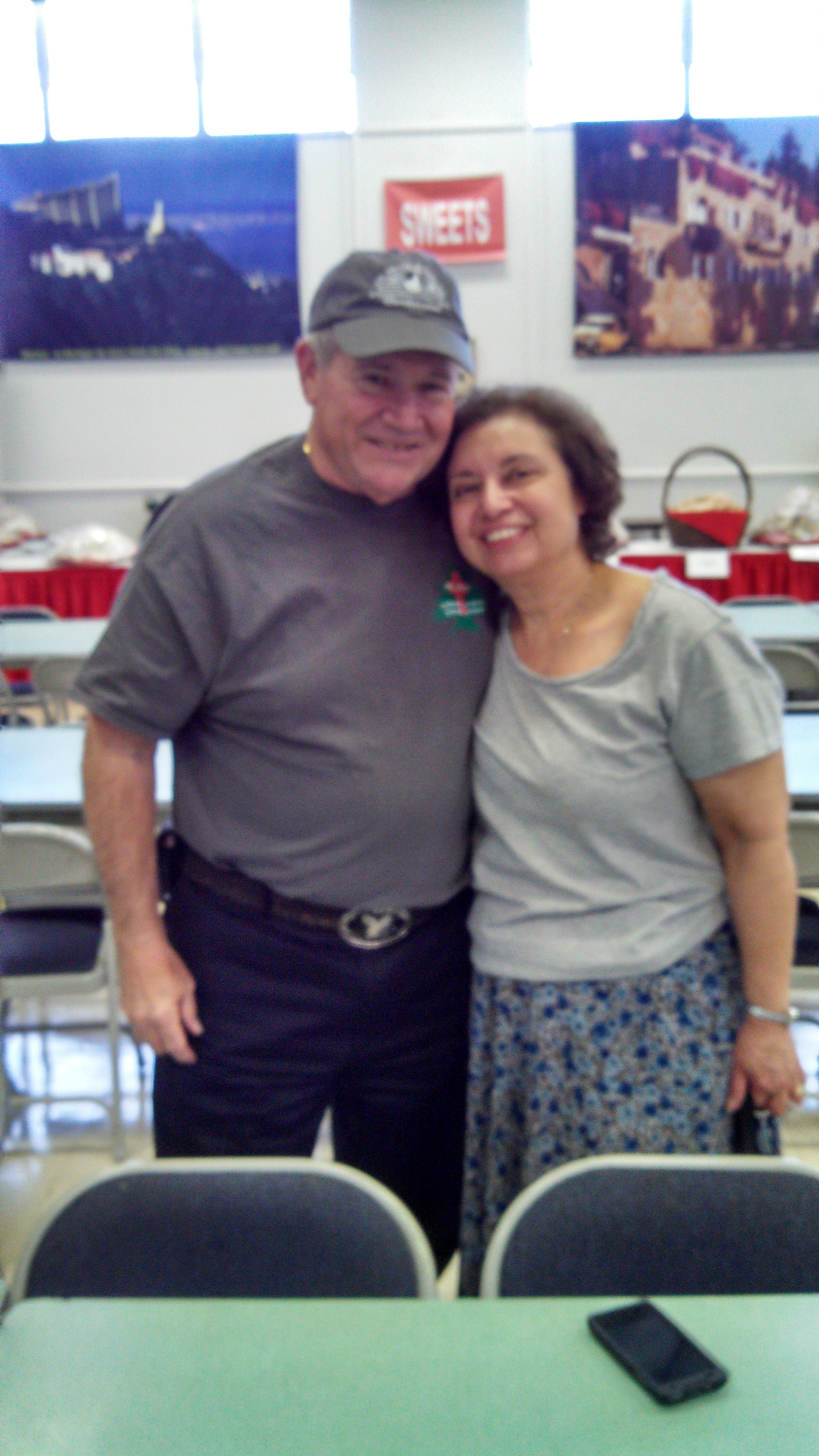
Gerry and Beverly Kimes

Gerry and Beverly Kimes

Below is a recipe for the zalaybeh. There are two recipes in the book, but I’ve chosen the first one to list here.

Zalaybeh

Dough:
121/2 pounds self-rising flour
21/2 pounds plain flour
1 cup self-rising cornmeal
½ envelope yeast dissolved in lukewarm water
Approximately 1 cup vegetable oil (add water to correct consistency)

Honey butter:
1 large tub of vegetable spread
1 bottle of yellow label table syrup
1 cup of powdered sugar

After mixing dry ingredients, add water-yeast mixture and then vegetable oil. Knead thoroughly, punch down and then resume kneading. Form a shallow cross with your hand in the center of the dough. Let rest 5 minutes before preparing doughnut balls.

Flour work surface and squeeze dough balls about 10 to 12 at a time. Gently roll in hands to smooth and pat off excess flour. Roll lightly in cornmeal (also spread on adjacent work surface) and place in large plastic tub, layering balls and lightly sprinkling cornmeal to prevent sticking. Continue until all balls are handled and placed in tub. Cover with damp cloth and allow to rise about 3 hours prior to frying.

To prepare honey butter, whip all ingredients together until smooth and fluffy.

Prior to frying, stretch out each individual dough ball and fry in a hot skillet of vegetable oil, turning once until golden brown. Immediately cut lengthwise into center about ½ deep and heavily spread honey butter mixture. (Sprinkling donuts with powdered sugar is your choice.) This recipe makes about 150 doughnuts.

Power to the People: A Poet You Should Know – John Beecher

As the end of National Poetry Month approaches, I want to introduce to John Henry Newman Beecher.
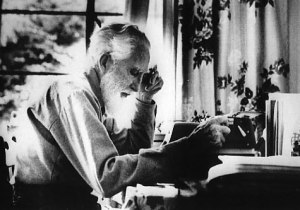
Beecher_photo

John Beecher has been called a political poet, the everyman’s scribe. Frank Adams, in the magazine “Southern Exposure,” once wrote:

 “John Beecher was a radical poet, perhaps America’s most persistent
for 50 years,The heir of an Abolitionist tradition and proponent of the
dispossessed seizing of power. His most enduring lyrics are about the
downtrodden’s fight for economic justice, human dignity and political
freedom. He heard the music in their voices with uncanny accuracy.”

Born in New York City on January 22, 1904, Beecher was three when his father, who was an executive for U.S. Steel, was transferred to Birmingham. When Beecher graduated from high school (at age 14), the elder Beecher put him to work in one of the steel mills until he became old enough to enter the military.

Beecher finally enrolled at Virginia Military Institute in 1919, but that experience did not last. He soon found his way back to Birmingham and its mills. During this second stint in the mills, Beecher worked 12-hour shifts.

Later Beecher left for Cornell to study engineering.  While there, an English instructor, William Strunk, Jr. (Yes, that William Strunk, Jr.) took interest in Beecher’s poetry.   Adams wrote, “He quit Cornell to return to the steel mills and writing. Eventually, he finished college at the University of Alabama in 1925, and that summer went to Middlebury College’s Bread Loaf School of English, where he studied with Robert Frost.”

Beecher later returned to the mill but was severely injured.  Beecher had probably already known that working in a mill could be hazardous to his health, but after his injury he penned poetry that spoke of the dangers and management’s overall dubious behavior.  His “Report to the Stockbrokers” illustrated these points:

I.

he fell off his crane
and his head hit the steel floor and broke like an egg
he lied a couple of hours with his brains bubbling out
and then he died
and the safety clerk made a report saying
it was carelessness
and the crane man should have known better
than not to watch his step
and slip in some grease on top of his crane
and then the safety clerk told the superintendent
he’d ought to fix the guardrail

II.

out at the open hearth
they all went to see the picture
called Men of Steel
about a third-helper who
worked up to the top
and married the president’s daughter
and they liked the picture
because it was different

III.

a ladle burned through
and he got a shoeful of steel
so they took up a collection through the mill
and some gave two bits
some gave four
because there’s no telling when

IV.

the stopper-maker
puts a brick sleeve on an iron rod
and then a dab of mortar
and then another sleeve brick
and another dab of mortar
and when has put fourteen sleeve bricks on
and fourteen dabs of mortar
and fitted on the head
he picks up another rod
and makes another stopper

V.

a hot metal car ran over the Negro switchman’s leg
and nobody expected to see him around here again
except maybe on the street with a tin cup
but the superintendent saw what an ad
the Negro would make with his peg leg
so he hung a sandwich on him
with safety slogans
and he told the Negro boy just to keep walking
all day up and down the plant
and be an example

VI.

he didn’t understand why he was laid off
when he’d been doing his work
on the pouring tables OK
and when with less age than he had
weren’t laid off
and he wanted to know why
but the superintendent told him to get the hell out
so he swung on the superintendent’s jaw
and the cops came and took him away

VII.

he’s been working around here since there was a plant
he started off carrying tests when he was fourteen
and then he third-helped
and then he second-helped
and then he first-helped
and when he got to be almost sixty years old
and was almost blind from looking into the furnaces
the bosses let him
carry tests again

VIII.

he shouldn’t have loaded and wheeled
a thousand pounds of manganese
before the cut in the belly was healed
but he had to pay his hospital bill
and he had to eat
he thought he had to eat
but he found out
he was wrong

IX.

in the company quarters
you’ve got a steel plant in your backyard
very convenient
gongs bells whistles mudguns steamhammers and slag-pots blowing up
you get so you sleep through it
but when your plant shuts down
you can’t sleep for the quiet

Beecher’s poetry also pointed to discrimination outside the mill.  Beecher wrote about the hypocrisy of the city’s racially-motivated bombings in “If I Forget Thee, O Birmingham!”

I.

Like Florence from your mountain.
Both cast your poets out
for speaking plain.

II.

You bowl your bombs down aisles
where black folk kneel
to pray for your blacker souls.

III.

Dog-town children bled
A, B, O, AB as you.
Christ’s blood is not more red.

IV.

Burning my house to keep
them out, you sowed wind. Hear it blow!
Soon you reap.

Beecher attended Harvard from 1926-1927. He also attended the Sorbonne, University of Wisconsin, and the University of North Carolina.

A quest for fairness for all people drove Beecher’s actions and art, said Foster Dickson during a telephone interview. Dickson is a Montgomery educator who has written a book on John Beecher’s legacy. “John Beecher came from a long line of people who strove to do the right thing – Lyman Ward Beecher, Henry Ward Beecher, and Harriet Beecher Stowe. He had a passion for protesting unfairness,” he said.

In addition to using poetry as a weapon of protest, Beecher also wrote prose and worked on FDR’s Fair Employment Practice Committee to investigate discrimination.  Beecher worked as a journalist and anthropologist, too.

He suffered consequences, as “If I Forget Thee, O Birmingham!” alludes to. He was investigated by the House Un-American Activities Committee, and in 1950, Beecher refused to sign California’s state loyalty oath and was fired from his position as a sociology assistant professor at San Francisco State College.

Beecher briefly returned to Birmingham in 1967 as Miles College’s visiting professor of creative writing.

Foster Dickson is disappointed that Beecher’s work, especially his poems, has been essentially forgotten.  In fact, Dickson’s book, “The Life and Poetry of John Beecher (1904-1980),” criticizes keepers of the “canon” for ignoring Beecher.   But as Frank Adams wrote in “Southern Exposure” magazine, Beecher did not write to be praised by his literary peers. “Like Isaiah, or Bunyun, and even Sandburg for a time, his poems were for average people. Beecher seemed to know instinctively that poetry was not just for critics, but that people used it in one way or another every day, not to flatter but to survive…The poet’s task was to listen, to record, then to chant his poetry.”

On May 11, 1980, Beecher died of lung disease in San Francisco.

Want to know more about John Beecher? Click this link.

Have you already heard of Beecher before reading this piece? If so, what’s your favorite Beecher poem? Leave a comment, please.



Remembering the Holocaust

Robert May was seven years old when Adolf Hitler gained power in Germany in 1933.   Things were uneventful at first: People still shopped at his father’s dry goods store, he continued to play with the community’s children, their neighbors still acted neighborly.  But things changed in 1935 when several anti-Semitic laws (known as the Nuremburg Laws) were passed.  Discrimination became commonplace. Propaganda flowed throughout their hometown of Camberg.   A main vehicle of the propaganda was the Nazi Party’s weekly paper Der Stürmer.  The tabloid seemed to be everywhere.  Each week the latest issue was plastered on a bulletin board located near his father’s store.  Nazi Storm Troopers staged regular boycotts in front of the Mays’ business, and the family was banned from the neighborhood grocery store, a place where they had shopped for years.  His oldest brother moved to France, while another left for Switzerland. An uncle moved to Holland.

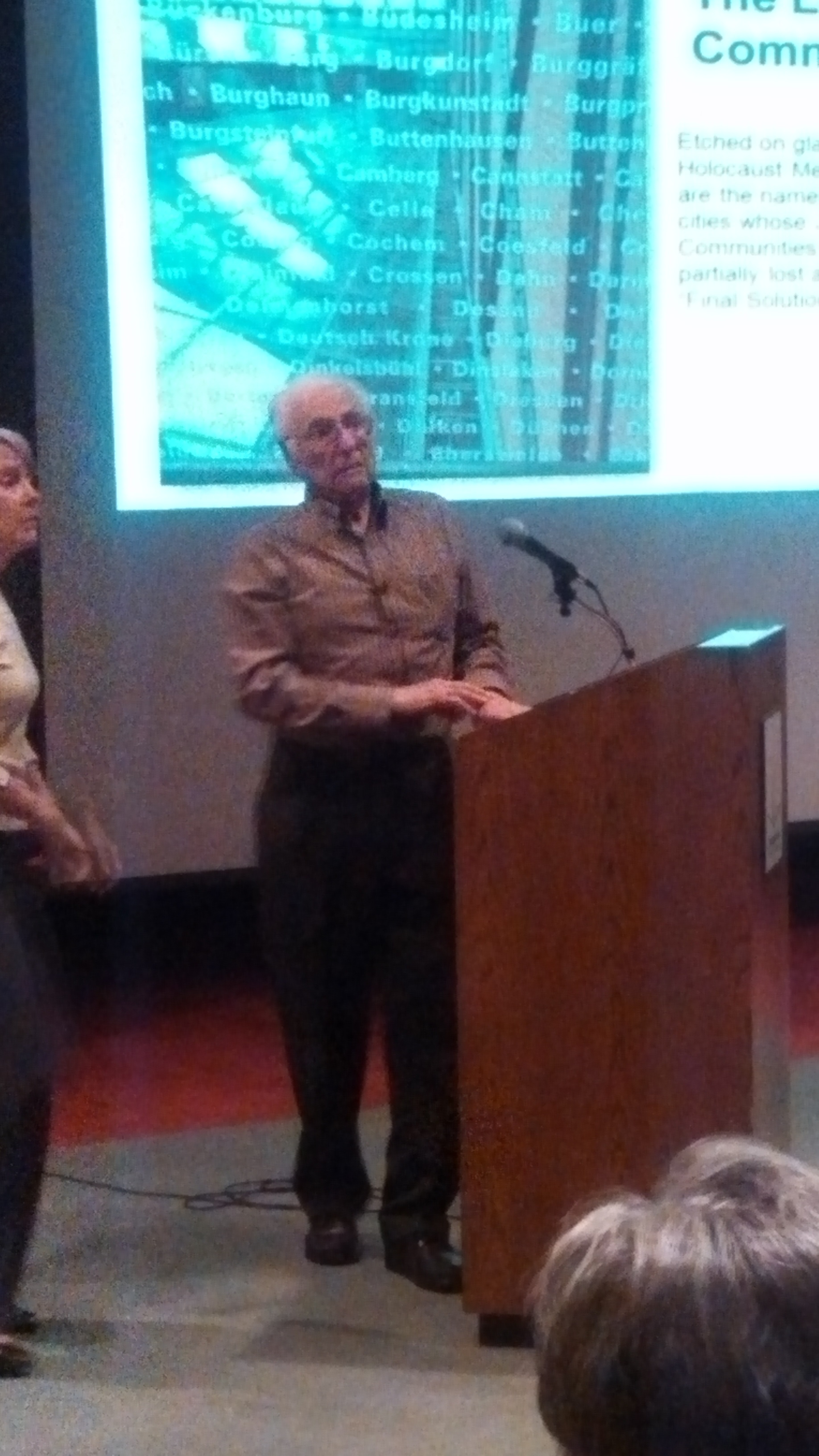
May told stories of survival and loss during Wednesday’s Brown Bag Lunch Series talk at the Birmingham Public Library.

He remembers being taunted at school.  The teachers were never mean, but the children were another story. “I remember two boys would throw rocks after school and call me a dirty Jew. I called them dirty Nazis. My parents, though, told me we did not do that,” he says.  In 1936, when school became unbearable, May moved to Frankfort with an aunt to attend a Jewish school there.  There, Mays encountered a challenging academic environment; his English teacher held a Ph.D. “I went from a small town to a sophisticated school.”  He remained at the school until Krystallnacht, which is also called the Night of Broken Glass.  On November 9 and 10 in 1938, Storm Troopers along with non-Jewish residents raided Jewish homes, businesses, and synagogues, breaking windows and glass, and destroying furniture. Thousands of Jews were rounded up.   May and his aunt had been warned and were able to seek shelter. His parents were also warned in Camberg and sought safety in Camberg’s Jewish cemetery. After the terrifying event, May’s parents returned to the town and were placed in protective custody at the jail; however, they were released several days later and learned that their house and store had been demolished.  In Frankfort, May’s apartment was destroyed, his school and synagogue burned down.  May explains that the Nazis used the assassination of an ambassador by a Jew as a pretext for the violence.

Safety for May came in the form of the Kindertransport.  After Kristallnacht, the English Parliament passed a bill that would allow Jewish children under 18 from several European countries, including Germany, to enter England to attend boarding schools or live in English homes or farms.  One catch though: The children had to come alone.  In January 1939, May was sent to a Jewish boarding school in Brighton. His uncle in Holland funded his education.  His parents joined him in England in September.  A year later, on the eve of the start of World War II, May and his parents sailed for the U.S.  He remembers other ships being torpedoed by German U-boats.   However, they made it to Cuba, and then New Orleans.  Mays attended Tulane at 16 in 1942, and started LSU Medical School in 1944. By 1954, May was a practicing OB-GYN in Birmingham.

Not every member of May’s family was able to escape. His aunt who accompanied him to Frankfort was eventually captured and placed in a concentration camp where she died.  His uncle who moved to Holland died at Auschwitz.  His older brothers did make it safely to the U.S.

May says his experiences have taught him three things.

  1. Only in the US can a boy from Camberg become successful and have a family.
  2. Education helped save his life.
  3. Never again should anything like the Holocaust occur.

The library, in conjunction with the Birmingham Holocaust Education Center, will present two additional talks on the Holocaust. Next Wednesday, March 19, Max Herzel will speak of his experiences in Belgium.  On March 28 a film, “The Path to Nazi Genocide,” will be shown. Each free event starts at noon.

Dr. Robert May

Dr. Robert May

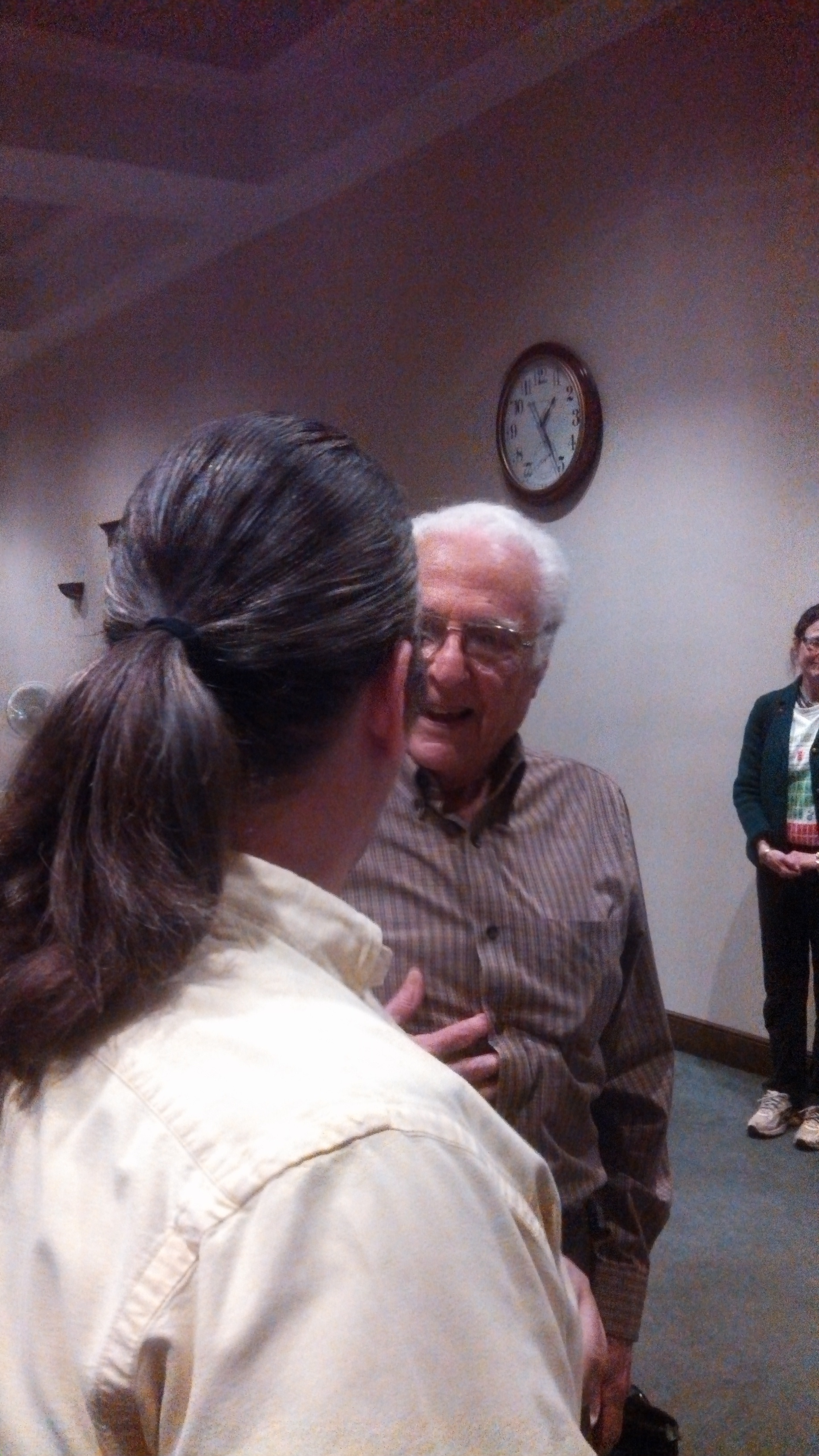
Dr. May chats with Billy Christie, a man he delivered in 1968.

Dr. May chats with Billy Christie, a man he delivered in 1968.

Civil Rights Trail expansion honors Smithfield heroes

The first child born to Jefferson County early settlers John Smith and Sallie Riley Smith grew up to become a physician. Joseph Riley Smith would later marry and father 12 children, and in 1882, after he had retired from medicine, Smith became a merchant and real estate developer. John Witherspoon Dubose, in his 1887 book, “Jefferson County and Birmingham, Alabama: Historical and Biographical,” wrote that Smith was “probably the largest individual real estate owner in Jefferson County.” Smith later developed a suburb for black professionals on one large tract of land, and he named this suburb Smithfield. Those in Smithfield were often called a “Number One Black” since they were members of Birmingham’s burgeoning black middle class. A.H. Parker, principal of Industrial High School (which today bears his name), lived in Smithfield.

However, with the passage of Birmingham’s race-based zoning laws in the early 20th century, by the 1940s, Smithfield, and surrounding areas, became ground zero in the fight to claim the American Dream of home ownership. It was not unusual for black residents to learn that houses that were once “black” were newly zoned for white residents or for them to be threatened if they dared to purchase homes on the white side of Center Street.   Arthur Shores, NAACP attorney, sued the city numerous times to contest the zoning ordinances. In 1947, a court judgment allowed Samuel Mathews to purchase a home in North Smithfield. Not long after, Mathews’ house became the first one of many to be bombed in and near Smithfield.

On Saturday, March 8, Rebecca Evans of College Hills, and a small crowd, stood in front of the Smithfield Public Library for the unveiling of a new extension of Birmingham’s Civil Rights Trail. Evans said she’s glad that now those who fought for fair housing are being remembered. The trail “will remind us of what we’ve been through,” she said.  Her friend, Lois Packer, who is a member of Smithfield’s Thirgood Memorial CME Church, agreed with Evans and was excited that there is now a safe place to walk. “It’s a great thing, what’s happening. It says a lot about who we are now. It’s a blessing, and I’m so proud of everyone and what they’re doing,” Packer said.

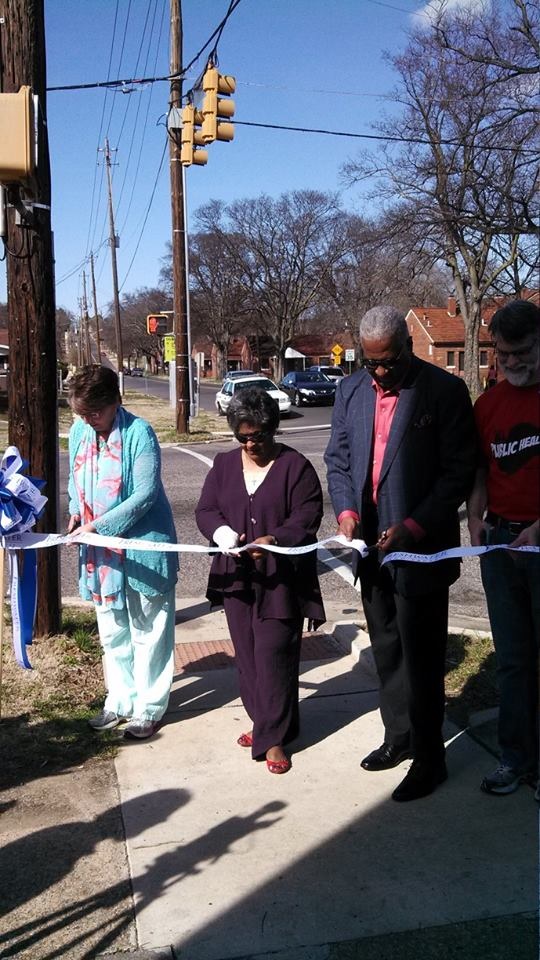
Birmingham Mayor William Bell led the ribbon-cutting ceremony that was also attended by Councilor Marcus Lundy, Barbara Shores, daughter of Arthur Shores, and Wendy Jackson, who is the executive director of Freshwater Land Trust, one of many organizations that collaborated on the project.

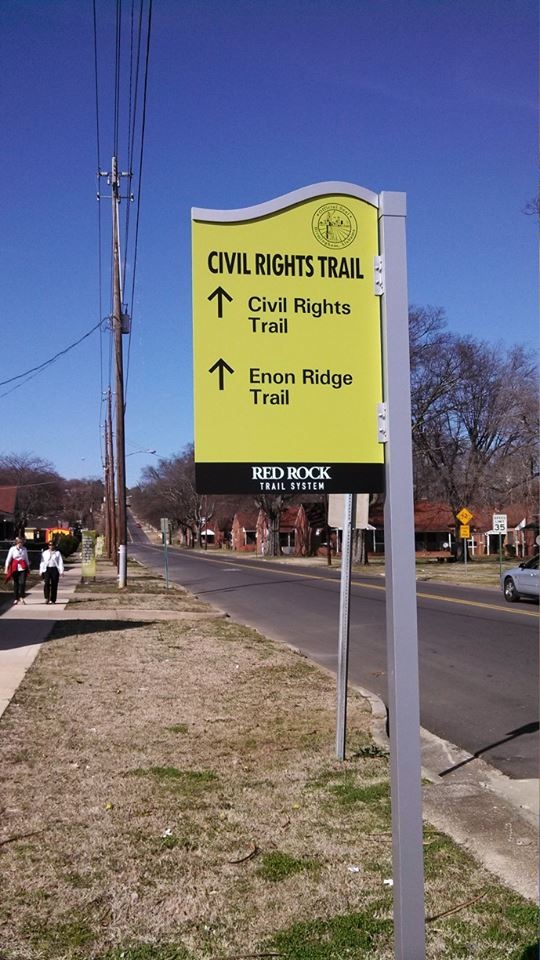
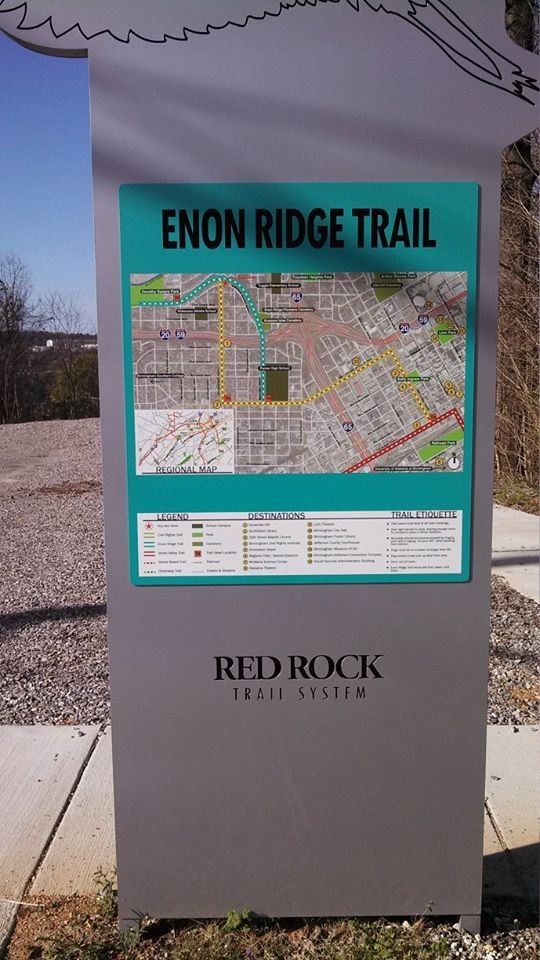
The 4-mile trail also winds its way through parts of the East Thomas and Enon Ridge neighborhoods. The trail, which is part of the Red Rock Ridge and Valley Trail System, was funded with $10 million from the federal TIGER program (TIGER stands for Transportation Investment Generating Economic Recovery). Several local non-profits, in addition to Freshwater, contributed to the project.  According the Freshwater’s website, the Red Rock Ridge and Valley Trail System is a proposed network of more than 750 miles of trails, bike lanes and sidewalks that will connect communities throughout Jefferson County.

Mayor Bell sees the trail as a melding of the past with the present and future.  He said while the trail honors the contributions of those Smithfield residents who were vital in the fight for civil rights, “we also recognize how far we’ve come as a community, and the changes that have come to our community so that all people could be the best that they could be and live the type of lives they want to live.”

(l to r) Wendy Jackson, Barbara Shores, Mayor William Bell, Dr. Mark Wilson, public health officer for the Jefferson County Department of Health

(l to r) Wendy Jackson, Barbara Shores, Mayor William Bell, Dr. Mark Wilson, public health officer for the Jefferson County Department of Health

Sign located on Center Street North

Sign located on Center Street North

image

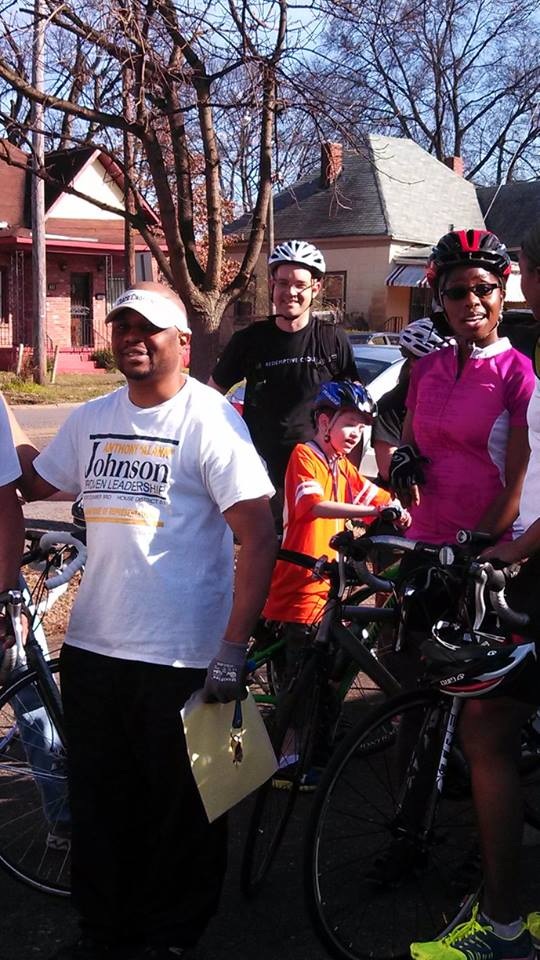
Bicyclists enjoy new Civil Rights trail extension

Bicyclists enjoy new Civil Rights trail extension

Who was Julia Tutwiler?

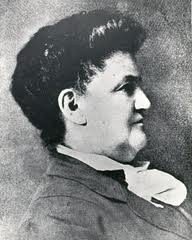
Julia Tutwiler

Julia Tutwiler

By now, you have probably heard about the problems within Julia Tutwiler Prison for Women. A recent Department of Justice report points out systemic sexual abuse and sexual harassment at the hands of the male guards.  The report asserts that the inmates’ Eighth Amendment right to be protected from harm is being violated. “Tutwiler has a history of unabated staff-on-prisoner sexual abuse and harassment. The women at Tutwiler universally fear for their safety,” the report states.  (The 36-page report can be read here.)

Investigation into the prison, which is located in Wetumpka, will continue, according to the DOJ.  Wetumpka is located about an hour and thirty minutes south of Birmingham.

Who was Julia S. Tutwiler?

According to the Encyclopedia of Alabama, Julia Strudwick Tutwiler was a writer, prison reformer and an outspoken advocate of education for women. Tutwiler worked with others to establish institutions that became the University of Montevallo and the University of West Alabama.

She was born to John and Julia Tutwiler. He was the University of Alabama’s chair of ancient languages, and she was the daughter of the university’s steward or business manager, in 1841 in Tuscaloosa. Tutwiler’s father believed in intellectual equality between men and women; he sent his daughter to a boarding school on the East coast.  During the Civil War, Tutwiler returned home to teach at a school her father had since started.

After the war Tutwiler attended Vassar College in Poughkeepsie, N.Y., but had to drop out due to lack of money.  She eventually studied privately with professors at Washington and Lee and earned a teaching certificate.

After years of traveling and studying abroad, Tutwiler returned to Alabama where she advocated for the education of women.  In 1892, she persuaded University of Alabama trustees to admit women.

“Angel of the Stockade”

Tutwiler organized the TBA during 1879 and 1880 so like-minded women could work on reforming conditions at Alabama jails and prisons.  She and her team pushed to separate hardened criminals from less violent ones, and men from women; she also believed that literacy and religious training would lessen recidivism.  Tutwiler also worked to end the practice of leasing convicts to businesses. (The book “Slavery by Another Name,” by Douglas A. Blackmon, sheds great light on this horrific system.) Because of her actions, she earned the nickname as “Angel of the Stockade.”

But Tutwiler had her share of detractors. In 1881, Tutwiler became president of Livingston Normal College (which is now the University of West Alabama), but the school was placed under state control in 1907. She was criticized for mixing personal money with the school’s money and poor record-keeping. She was also accused of being impulsive and hard to work with.  She was eventually replaced in 1910. Tutwiler was also criticized for not speaking out against the segregation of blacks and whites in the classroom.

On March 24, 1916, Tutwiler died in Birmingham.  The state prison bearing her name was opened in 1942.

Tidbit: Tutwiler Hotel, located in downtown Birmingham, is named after Julia Tutwiler’s uncle, Edward.  Edward Tutwiler, who built the hotel, was the founder of Leeds.

Did you know?

Tutwiler’s poem, “Alabama,” became the state song in 1931. Here are the lyrics:

Alabama, Alabama, We will aye be true to thee,
From thy Southern shores where groweth,
By the sea thy orange tree.
To thy Northern vale where floweth,
Deep blue the Tennessee,
Alabama, Alabama, we will aye be true to thee!

Broad thy stream whose name thou bearest;
Grand thy Bigbee rolls along;
Fair thy Coosa-Tallapoosa
Bold thy Warrior, dark and strong,
Goodlier than the land that Moses
Climbed lone Nebo’s Mount to see,
Alabama, Alabama, we will aye be true to thee!

From thy prairies broad and fertile,
Where thy snow-white cotton shines,
To the hills where coal and iron
Hide in thy exausted mines,
Strong -armed miners -sturdy farmers;
Loyal hearts what’er we be,
Alabama, Alabama, we will aye be true to thee!

From thy quarries where the marble
White as that of Paros gleams
Waiting till thy sculptor’ss chisel,
Wake to life thy poet’s dreams;
Fear not only wealth of nature,
Wealth of mind has no fee,
Alabama, Alabama, we will aye be true to thee!

Where the perfumed south-wind whispers,
Thy magnolia groves among,
Softer than a mother’s kisses,
Sweeter than a mother’s song,
Where the golden jasmine trailing,
Woos the treasure-laden bee,

Alabama, Alabama, we will aye be true to thee!

Brave and pure thy men and women,
Better this than corn and wine
Make us worthy, God in Heaven
Of this goodly land of Thine.
Hearts as open as thy doorways.
Liberal hands and spirits free.
Alabama, Alabama, we will aye be true to thee!

Little, little can I give thee,
Alabama, mother mine.
But that little – hand, brain, spirit.
All I have and am are thine.
Take, O take, the gift and giver.
Take and serve thyself with me.
Alabama, Alabama, we will aye be true to thee!

Farewell to the ‘Most Hated White Man in the South’

The first thing I noticed when arriving at Birmingham’s Bethel Baptist Church of Collegeville today for the “homegoing” service of the Rev. Lamar Weaver, 85, was the hearse from Poole’s Funeral Chapels, Inc.

How fitting since it was the Poole brothers, Ernest and John, who helped save Weaver’s life 56 years ago.

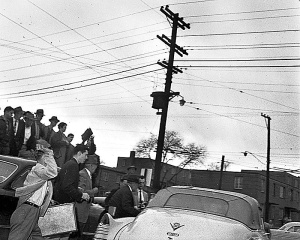
On March 6, 1957, a day after the Alabama Public Commission ruled that waiting rooms designated for interstate travel must remain segregated, Weaver met the Rev. Fred Shuttlesworth, Birmingham’s formidable civil rights leader and Bethel’s pastor, and his wife, Ruby, at Terminal Station. The Shuttlesworths had bought tickets to Atlanta and sat in the whites-only waiting room in defiance of the ruling. Weaver, a white man, had come to the station to show his support. As the Shuttlesworths and Weaver waited for the train, a crowd of about 100 segregationists, led by “Dynamite Bob” Chambliss (one of the men responsible for bombing the 16th Street Baptist Church in 1963), began to harass them. Before long, police ordered all those without tickets to leave the waiting room, and this included Weaver.  In his 2001 autobiography, “Bury My Heart in Birmingham,” Weaver recounted that long walk to his car:

A police officer pushed me out on to the sidewalk and the door closed behind me. I was surrounded by this angry mob. I was terrified. I turned toward the area where my car was parked and started walking slowly to my car. The mob was so close to me; I could feel their hot breath on the back of my neck. I knew if I ran I would most certainly be killed much like a pack of wild dogs would do when they chase after prey. Then suddenly, someone hit me from behind with a suitcase and knocked me to the ground. Some of the persons in the mob began kicking me. I struggled back to my feet trying desperately to make it to my car. The mob followed me. The news media were there taking pictures. Thank God for those reporters. If they had not been there with their cameras, I’m sure I would have been killed. Getting to my car seemed like an eternity. Finally I made it and managed to somehow get inside.

The hostile crowd threw cement blocks and rocked the vehicle, attempting to flip it over. Weaver described Chambliss being at the front of his car, sneering and cursing while rocking it.

Weaver managed to back up but not before someone in the crowd opened the car door and began beating him.  A reporter from a national media outlet pushed the man away and Weaver was able to speed off. However, the police charged Weaver with running a red light and reckless driving.  He opted for an immediate trial and was able to stand before a city judge that day. The judge fined Weaver $25 and ordered him to leave town.

The Poole brothers paid Weaver’s fine, hid his car and drove him to the funeral home. Here’s Weaver’s account of what happened next:

I hid there for the rest of the day and that night. A Negro informant told the police that I was hiding at the Poole Funeral Home. When they couldn’t find me there, the mob continued their search for me throughout the city. At least twice during the late hours of the night, angry Whites came into the funeral home looking for me. [Three employees] of the Poole Funeral Home had hidden me in a casket.

According to Weaver, the next day, he was taken to the airport and flew to Washington, D.C. to testify before the U.S. Senate subcommittee on civil rights. (He had made his airplane reservations under the pseudonym James Bishop to remain hidden.) While waiting to testify, Weaver was told by his congressional representative, “Don’t ever go back to Birmingham. You’ll never be welcomed. You are a disgrace. You are the most hated white man in the south.” Weaver did not let the representative’s words deter him from testifying.

Weaver’s deeds were not without consequences.  He had made many enemies, especially when he decided to run against Eugene “Bull” Connor for his seat on the Birmingham City Commission. During his campaign, a bullet was fired into his house, almost hitting one of his daughters. Soon after, his first wife divorced him and moved to north Alabama. Weaver also lost the election to Connor.

During today’s eulogy for Weaver, Bethel’s current pastor, the Rev. Thomas L. Wilder, Jr., asked, “Why would a white man in the middle of segregated Birmingham risk everything?” Wilder told the small group of mourners of an event that Weaver witnessed at a young age that may have been the impetus for his life’s work.  In Weaver’s words:

I was about four years old and we were traveling down an old dirt road near [Centre], Alabama. I thought it must have been on the weekend because as we approached a crossroad I saw a large group of people standing around in a festive atmosphere. There were so many people that they were partially blocking the road. As we drew closer, I was not prepared for what I was about to see. I witnessed one of the most horrific things I have ever seen even to this day. What I witnessed was a horrible experience for me. As our car stopped, we saw some White men, some dressed in robes, standing on platform with a Negro boy who I think could have been anywhere from fifteen to eighteen years old. There he was standing stripped of his clothing and the Whites were savagely beating him. Then they brought out axes and they began hacking his body to pieces, killing him before our very eyes. It was like a slaughterhouse. Blood was everywhere. My father, mother and I watched in horror. I just sat there horrified. It was a sight I will remember for the rest of my life. Looking back now, that experience made an impact on my life that may have been the reason my life took the path that it did.

“Please for the rest of your life, remember Rev. Lamar Weaver. Remember those who risked it all for the sake of the cause,” Wilder admonished us.

Weaver’s son, Robert Lamar, also spoke at today’s service. He reminded everyone of the circular nature of life.  Weaver, who had been living in Kennesaw, Ga., had once again returned to Birmingham, the city he loved and fought to change. “And today, with God’s plan, we will bury my father’s heart in Birmingham.”

Weaver shaking hands with Shuttlesworth as Shuttlesworth's first wife, Ruby, looks on.  Weaver was on hand at Birmingham's Terminal Station to show support of the couple as they waited in the whites-only waiting room. Credit: Birmingham News/Alabama Media Group

Weaver shakes hands with Shuttlesworth as Shuttlesworth’s first wife, Ruby, looks on. Weaver was on hand at Birmingham’s Terminal Station to show support of the couple as they waited for their train to Atlanta in the whites-only waiting room. Credit: Birmingham News/Alabama Media Group

A mob surrounds Weaver's car as he attempts to leave the terminal. Credit: Birmingham News/Alabama Media Group

A mob surrounds Weaver’s car as he attempts to leave the terminal. Credit: Birmingham News/Alabama Media Group